



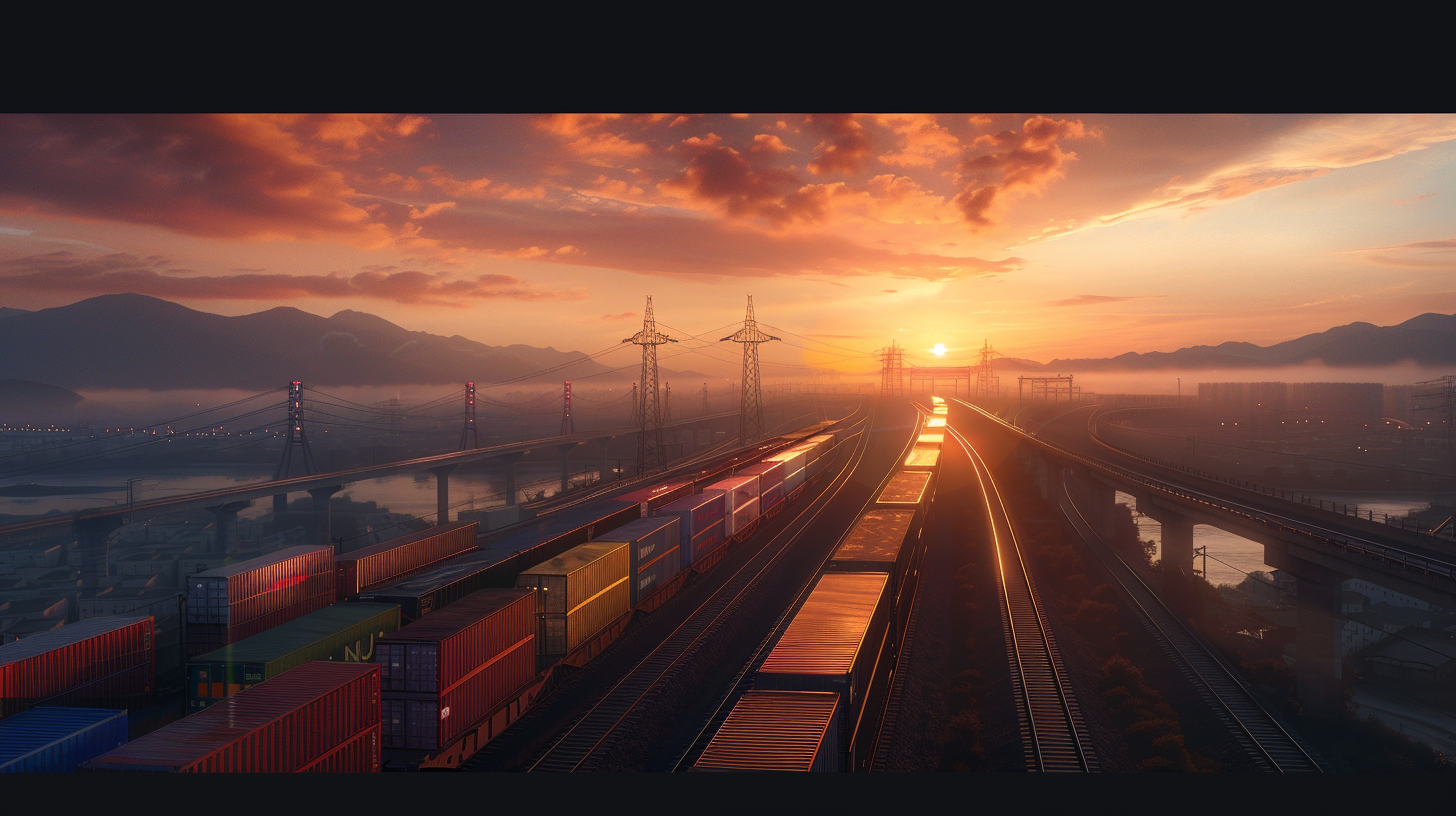
The Ultimate Guide to China-Europe Railway Freight: Balance Speed and Cost for Your B2B Imports
For overseas B2B buyers, Amazon FBA sellers, and supply chain managers, importing goods from China often feels like a constant battle between time and money. On one hand, air freight guarantees rapid delivery but can severely diminish your profit margins, especially during peak seasons. On the other hand, traditional sea freight is highly economical but exposes your supply chain to 35-45 days of transit time, unpredictable port congestions, and frustrating customs delays.
If you are struggling with skyrocketing shipping rates or unacceptably slow delivery schedules, there is a golden middle ground. Enter railway freight. In recent years, the China-Europe Railway Express has evolved into a highly reliable, scheduled logistics network that solves the modern importer’s biggest pain points. By combining the speed of air travel with the volume capacity of ocean shipping, railway freight offers an unparalleled solution for businesses looking to optimize their cross-border supply chains. In this comprehensive guide, we will explore why shipping by rail from China is the ultimate strategy for your B2B logistics and how our expert forwarding services can guarantee a seamless, stress-free delivery.
Air Freight vs. Sea Freight vs. Railway Freight: Choosing the Best Route
When scaling your international business, choosing the correct transportation channel is the most critical decision you will make. To understand the true value of railway freight, we must compare it directly against the traditional methods of air and ocean shipping. Understanding the railway freight vs sea freight from China dynamic is essential for intelligent inventory planning.
1. Air Freight (The Speed King)
-
Transit Time: 5 to 10 days.
-
Cost Level: Very High.
-
Best For: High-value, lightweight electronics, urgent sample deliveries, and strict deadline orders.
-
The Downside: The cost is often prohibitive for bulk commodities. Strict aviation regulations also make it difficult to ship batteries, liquids, and oversized cargo.
2. Sea Freight (The Volume Champion)
-
Transit Time: 35 to 45 days (excluding potential port delays).
-
Cost Level: Low.
-
Best For: Massive volume shipments (FCL), heavy machinery, and non-urgent inventory restocking.
-
The Downside: The incredibly slow transit time ties up your capital for over a month. Additionally, ocean freight is highly susceptible to geopolitical rerouting, weather delays, and blank sailings.
3. Railway Freight (The Golden Middle Ground)
-
Transit Time: 20 to 30 days (Full timetable trains have compressed this even further, sometimes reaching destinations in 11 to 20 days).
-
Cost Level: Moderate (Up to 70% cheaper than air freight and only marginally more expensive than sea freight).
-
Best For: Medium-to-high value goods, Amazon FBA inventory, automotive parts, and seasonal consumer products.
-
The Downside: Requires strategic customs clearance at multiple borders—which is exactly why you need a reliable rail freight forwarder China to Europe.
By opting for a China to Europe train, you effectively cut your transit time in half compared to ocean shipping, allowing for faster inventory turnover and improved cash flow, all while keeping your China-Europe railway freight cost significantly lower than air transport.
Understanding the China-Europe Train Network and Transit Times
The operational efficiency of rail logistics has reached unprecedented heights. The China railway express transit time is meticulously optimized through fixed-schedule, full-timetable services that prioritize border crossings and rapid container reloading.
The railway network spans across the Eurasian continent, typically exiting China through major land ports like Alashankou or Khorgos, traversing through Kazakhstan, Russia, and Belarus, before entering the European Union via Malaszewicze in Poland or expanding towards Budapest, Hungary. Because the track gauges differ between China (standard gauge), Russia (broad gauge), and Europe (standard gauge), containers are swiftly transferred between trains at the borders using advanced gantry cranes.
With the introduction of the Trans-Caspian routes (the Middle Corridor), the network has become highly resilient. If the northern route experiences winter congestion, intelligent freight forwarders can reroute your railway freight to ensure your supply chain remains uninterrupted. This level of dynamic routing is a hallmark of top-tier freight forwarder China services.
Why DDP Shipping is the Ultimate Game-Changer in Rail Logistics
One of the biggest anxieties for overseas buyers is navigating the complex web of European and Middle Eastern customs regulations. Unexpected VAT charges, import duties, and missing compliance documents can hold your cargo hostage at the border for weeks. This is where DDP shipping (Delivered Duty Paid) becomes your ultimate competitive advantage.
1. Zero Customs Hassle for the Buyer
Under a DDP shipping agreement, we assume full responsibility for the entire transportation process. This means we handle the export customs clearance in China, the complex transit declarations across Central Asia, and the final import customs clearance and tax/VAT payments in the destination country. You simply place your order, and we deliver the goods directly to your warehouse or Amazon FBA center.
2. Eliminating Hidden Costs
Many logistics providers hook clients with exceptionally low base rates, only to bombard them later with destination terminal handling charges (THC), warehousing fees, and customs broker fees. Our Amazon FBA railway shipping DDP service provides a transparent, all-inclusive, door-to-door rate. The price we quote is the exact price you pay. By eliminating hidden costs, we empower B2B buyers to accurately calculate their landed costs and profit margins.
3. Streamlined Amazon FBA Delivery
For Amazon sellers, strict adherence to fulfillment center requirements is mandatory. We provide tailored rail logistics solutions that include palletizing, Amazon labeling, and direct truck dispatch from our European transit warehouses directly into Amazon FBA centers across Germany, France, the UK, and Italy.
Special Cargo Handling: Overcoming Railway Restrictions
A common misconception is that railway freight is too strict for certain products. While the railway authorities do have stringent safety protocols, a highly experienced freight forwarder can seamlessly manage special cargo.
If your products contain pure batteries, integrated lithium-ion batteries, or specific cosmetics, they require specialized MSDS (Material Safety Data Sheet) audits and UN38.3 certifications. Our compliance experts pre-audit all documentation before your cargo even leaves the factory, ensuring zero delays at the rail terminal. Furthermore, for temperature-sensitive goods shipped during the harsh Eurasian winter, we deploy temperature-controlled containers (Reefers), guaranteeing that electronics, cosmetics, and liquid goods remain perfectly safe regardless of external weather conditions.
Advanced Tracking and Supply Chain Transparency
In modern B2B logistics, visibility is just as important as speed. Knowing exactly where your million-dollar inventory is at any given moment is crucial for your peace of mind. As a reliable rail freight forwarder China to Europe, we equip every shipment with 24/7 real-time GPS tracking. From the moment your cargo is loaded in Chongqing, Xi’an, or Chengdu, to the moment it arrives in Warsaw, Duisburg, or Budapest, you have complete visibility. You are never left in the dark wondering if your goods are stuck at a border crossing.
Frequently Asked Questions (FAQ)
1. What is the volumetric weight formula for railway freight?
Unlike sea freight where billing is primarily based on CBM (Cubic Meters), or air freight which uses a 1:167 ratio, railway freight typically calculates volumetric weight using the formula: 1 CBM = 167 KG. If your cargo’s actual weight is lighter than its volumetric weight, you will be charged based on the volumetric weight. Always pack your goods densely to optimize shipping costs!
2. Can I ship products with batteries via the China-Europe train?
Yes, absolutely. While the regulations are strict, we specialize in handling battery-integrated products (like e-scooters, laptops, and power tools). We will help you verify your MSDS and UN38.3 test reports to ensure full compliance with international rail transport regulations, preventing any rejections at the departure station.
3. What happens if there is severe congestion at the border crossings?
Supply chain resilience is our priority. During peak seasons (like pre-Christmas) when border ports like Alashankou or Khorgos face congestion, we proactively monitor transit times and can utilize alternative routings, such as the Trans-Caspian International Transport Route (TITR) or adjust to less crowded secondary border crossings, ensuring your railway freight remains on schedule.
Optimize Your Supply Chain Today
Stop letting unpredictable shipping times and hidden logistics fees eat into your company’s profitability. By leveraging our expert railway freight services, you secure a transportation method that perfectly balances speed, cost, and reliability. Whether you are moving automotive components to Germany or restocking your Amazon FBA inventory in the UK, our all-inclusive DDP shipping solutions are designed to make importing from China completely effortless.
Stop guessing your logistics costs. Send us your cargo’s weight, dimensions, and destination today, and our experts will provide a customized, transparent, and highly competitive quote within 24 hours.