






Less Than Container Load (LCL) Shipping from China: The Ultimate DDP Guide
Are your profit margins being destroyed by sky-high air freight costs, yet your cargo volume is simply too small to justify booking a full ocean container from China? Waiting weeks for warehouse consolidation, suffering through opaque customs clearance delays, and getting hit with shocking hidden fees at the destination port can ruin your Amazon FBA inventory planning and destroy your cash flow.
Fortunately, there is a better way. By leveraging optimized Less than Container Load (LCL) shipping solutions equipped with full DDP (Delivered Duty Paid) services, you can dramatically reduce your logistics costs while maintaining reliable delivery schedules. Whether you are shipping to the USA, Europe, or the Middle East, our transparent LCL freight network ensures your cargo moves swiftly, clears customs seamlessly, and arrives at your warehouse with zero surprise charges.
What is Less Than Container Load (LCL) Shipping?
Less than Container Load (LCL) is a shipping method where multiple importers share space inside a single ocean container. It is the most cost-effective logistics solution for cargo volumes between 1 CBM and 15 CBM, allowing you to pay only for the exact space your freight occupies.
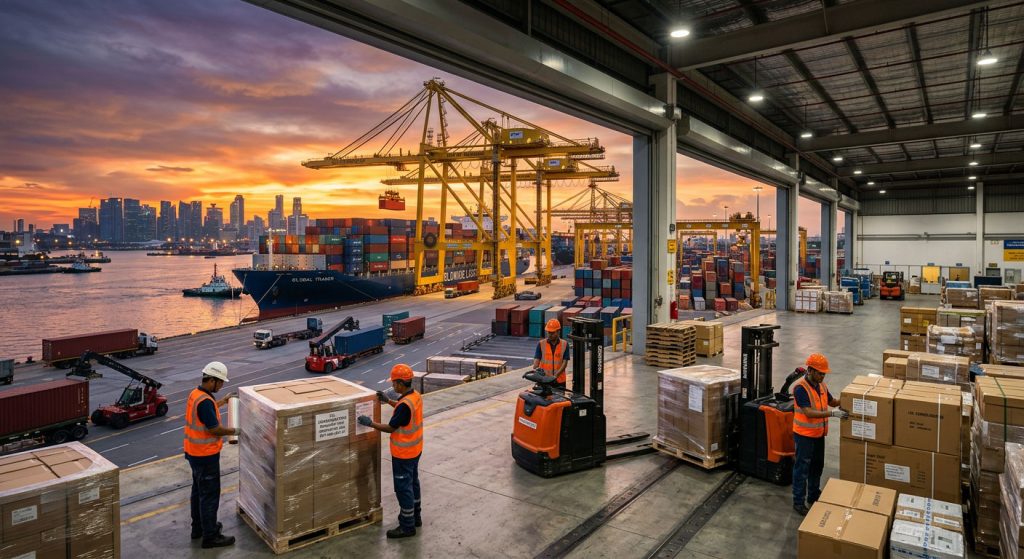
When you choose LCL, a reliable China freight forwarder collects your goods from your supplier, consolidates them with other shipments heading to the same destination, and loads them into a standard 20ft or 40ft shipping container. Upon arrival at the destination port, the container is deconsolidated (unpacked), and your specific pallets or cartons are dispatched for final delivery via truck or courier (UPS/FedEx). This method drastically lowers your barrier to international trade, enabling steady inventory replenishment without the immense capital tie-up of Full Container Load (FCL) shipments.
LCL vs. Air Freight vs. Railway: Which Should You Choose?
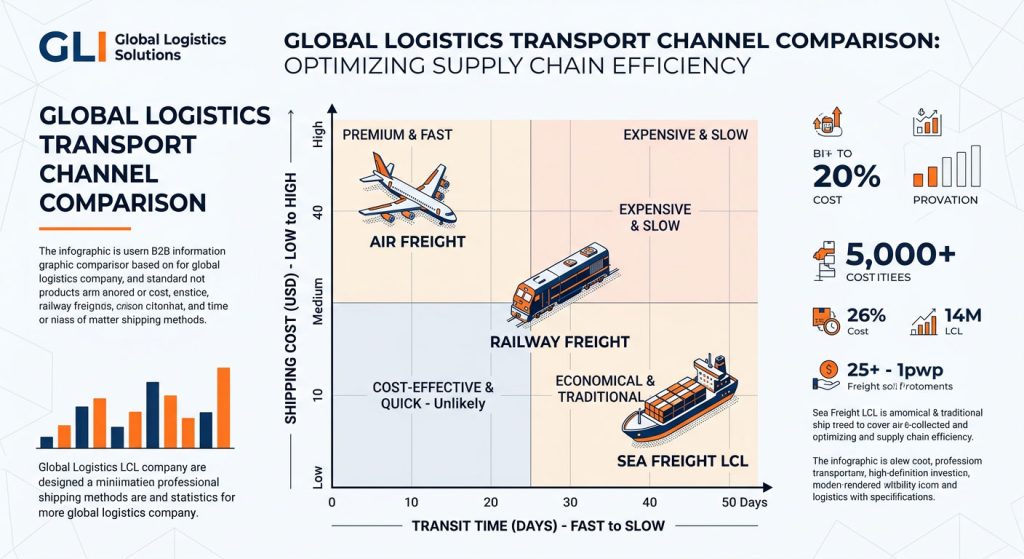
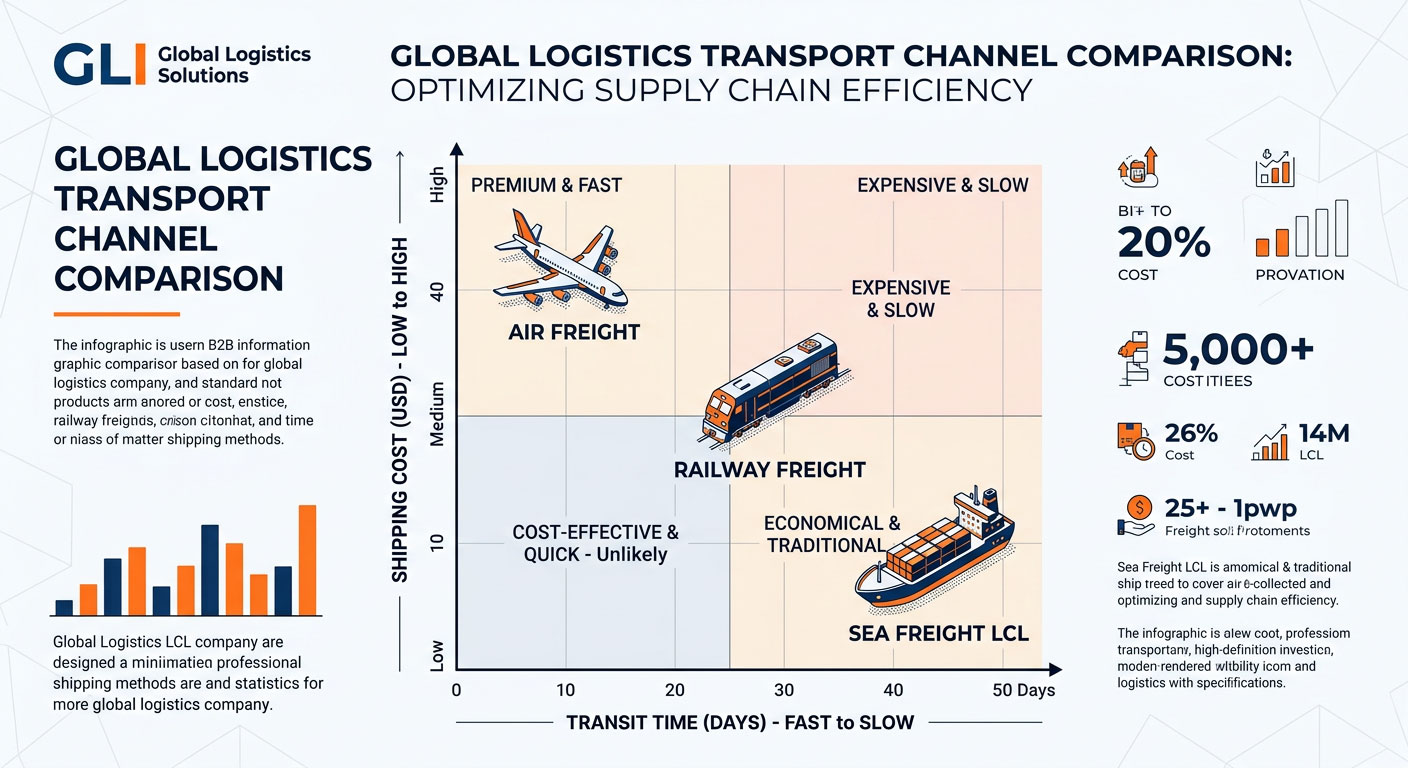
Selecting the right logistics channel depends entirely on your balance of urgency, budget, and destination. Here is a comprehensive breakdown of how LCL shipping compares to other primary transport methods from China:
1. Air Freight / Air Express (5-10 Days)
Air freight is the undisputed king of speed. If you are launching a new product next week or desperately need to restock a sold-out Amazon FBA listing, air transport is your lifeline. However, this speed comes at a premium. Air freight calculates costs based on chargeable weight (gross weight vs. dimensional weight) and is typically 4 to 6 times more expensive than ocean freight. Best for: Urgent restocks, high-value electronics, or shipments under 200 kg.
2. Sea Freight LCL (25-40 Days)
Ocean Less than container load shipping is the backbone of global B2B trade. Taking approximately 25-30 days to the US West Coast, 35-40 days to the US East Coast, and 30-40 days to European ports, it requires proactive inventory forecasting. The massive advantage here is cost reduction. LCL allows you to scale your business profitably. Furthermore, our premium “Fast Sea LCL” options utilize high-speed vessels (like Matson to the USA), trimming transit times down to 15-20 days while keeping costs far below air freight. Best for: Routine inventory restocks, bulky goods, and shipments between 1 CBM and 15 CBM.
3. Railway Freight (25-35 Days – Europe Only)
For B2B buyers and Amazon sellers in Europe, the China-Europe Freight Train offers a “Goldilocks” solution. Railway LCL bridges the gap perfectly—it is about 50% cheaper than air freight and often 10-15 days faster than traditional sea freight. It is highly resistant to ocean port congestions and offers stable, year-round schedules directly into logistics hubs in Germany, Poland, and the UK. Best for: European importers needing a middle-ground balance of moderate speed and affordable cost.
Understanding LCL Costs: How to Calculate CBM
One of the biggest hurdles for importers is understanding how they are billed. In LCL shipping, freight rates are calculated based on CBM (Cubic Meters) or weight, whichever is greater (often referred to as Weight/Measure or W/M).
To calculate your CBM, multiply the dimensions of your cargo in meters:
Length (m) × Width (m) × Height (m) = CBM
Example: If you have a pallet that is 1.2m long, 1.0m wide, and 1.5m high:
1.2 × 1.0 × 1.5 = 1.8 CBM.
If the standard LCL rate is $100 per CBM, your base ocean freight cost is $180.
However, heavy goods (like metal hardware) might exceed the standard density ratio (usually 1 CBM = 1000 kg for sea freight). If your 1.8 CBM pallet weighs 2,500 kg, you will be billed based on the heavier volumetric metric (2.5 tons instead of 1.8 CBM). A professional China freight forwarder will always help you optimize your packaging to minimize dead space and reduce your volumetric weight.
The Power of DDP LCL Shipping: Zero Hidden Fees
Many novice importers fall into the trap of choosing an LCL quote that looks incredibly cheap upfront (often quoted under CIF or FOB terms), only to be devastated by extortionate destination fees, unpacking charges, customs brokerage fees, and unexpected taxes.
This is where our DDP (Delivered Duty Paid) LCL service revolutionizes your supply chain.
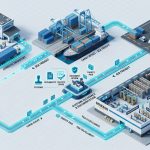
When you choose DDP shipping, we handle the entire process from end to end. The price we quote is the final price you pay. We take 100% responsibility for:
-
Export customs clearance in China.
-
Ocean freight and container consolidation.
-
Destination port deconsolidation (unpacking).
-
Import customs clearance and payment of all duties/VAT.
-
Final mile delivery directly to your warehouse or Amazon FBA center.
With DDP, you eliminate financial uncertainty. You can accurately calculate your landed cost per unit, allowing you to set competitive retail prices and protect your profit margins. You simply place your order, and we ensure it arrives at your door—fully cleared and ready for sale.
Frequently Asked Questions (FAQ)
What is the minimum volume for Less than Container Load (LCL)?
The standard minimum chargeable volume for LCL shipping is 1 CBM (Cubic Meter). Even if your cargo is 0.6 CBM, you will be billed for the minimum 1 CBM rate. For extremely small shipments under 0.5 CBM or under 100kg, international couriers (DHL/UPS) or Air Freight are often more economical.
Is LCL slower than FCL (Full Container Load)?
Yes, LCL typically takes 4 to 7 days longer than FCL. This is because LCL requires additional time at the origin port for consolidation (packing multiple shippers’ goods into one container) and extra time at the destination port for deconsolidation (unpacking and sorting) before final delivery.
Can you ship dangerous goods or batteries via LCL?
Yes. While standard carriers reject sensitive items, our specialized hazardous materials (Hazmat) LCL channels are fully equipped to handle pure batteries, cosmetics, and electronic devices. We manage the necessary MSDS verification and compliance documentation to ensure safe, legal transport and smooth customs clearance.
Streamline Your Supply Chain Today
Stop letting unpredictable shipping costs and customs delays dictate your business growth. Whether you are an Amazon FBA seller needing reliable weekly restocks or a B2B wholesaler importing diverse product lines, our comprehensive Less than Container Load solutions are engineered to save you time and money.
Ready to cut your logistics costs?
Don’t settle for opaque quotes. Send us your cargo’s weight, dimensions, and destination zip code today, and our logistics experts will provide a transparent, customized DDP LCL quote within 2 hours.