






April 2026 UPS/DHL Fuel Surcharges: Cost-Saving Guide
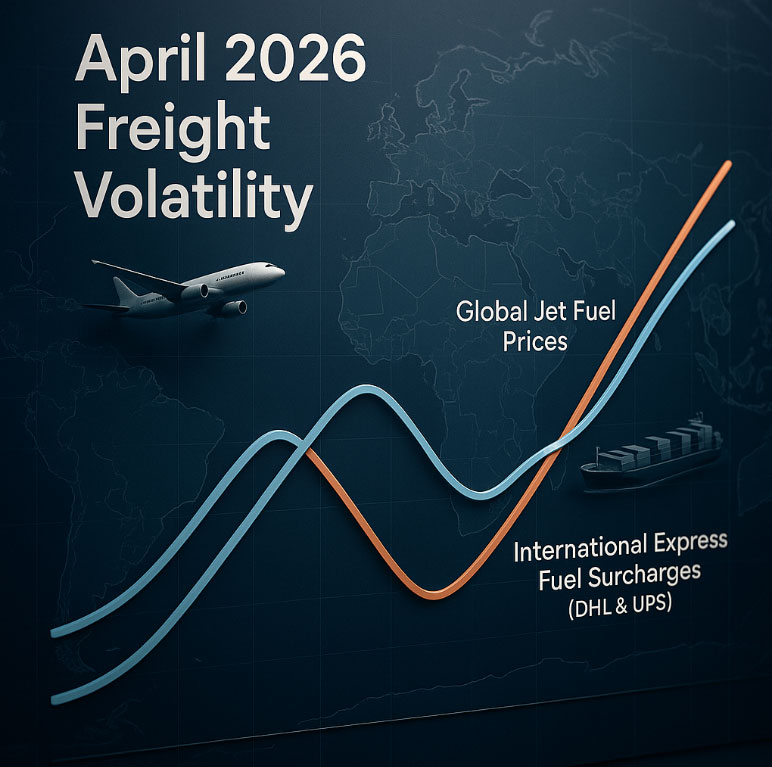
Problem: If you are sourcing products from China or managing Amazon FBA inventory, the recent spikes in international shipping costs have likely hit your margins hard. In April 2026 alone, international express fuel surcharges experienced unprecedented volatility, with rates soaring past 40%.
Agitate: This instability makes it nearly impossible to quote accurate landed costs to your buyers. A sudden 10% jump in fuel surcharges can wipe out the profit margin on a highly competitive product, leaving your business vulnerable to hidden fees and unpredictable cash flow.
Solution: But you do not have to absorb these losses. By understanding how these surcharges are calculated and leveraging smarter logistics strategies, you can mitigate the impact. This guide breaks down the April 2026 DHL and UPS fuel surcharges and provides actionable strategies to protect your bottom line.
What Are the DHL and UPS Fuel Surcharges for April 2026?
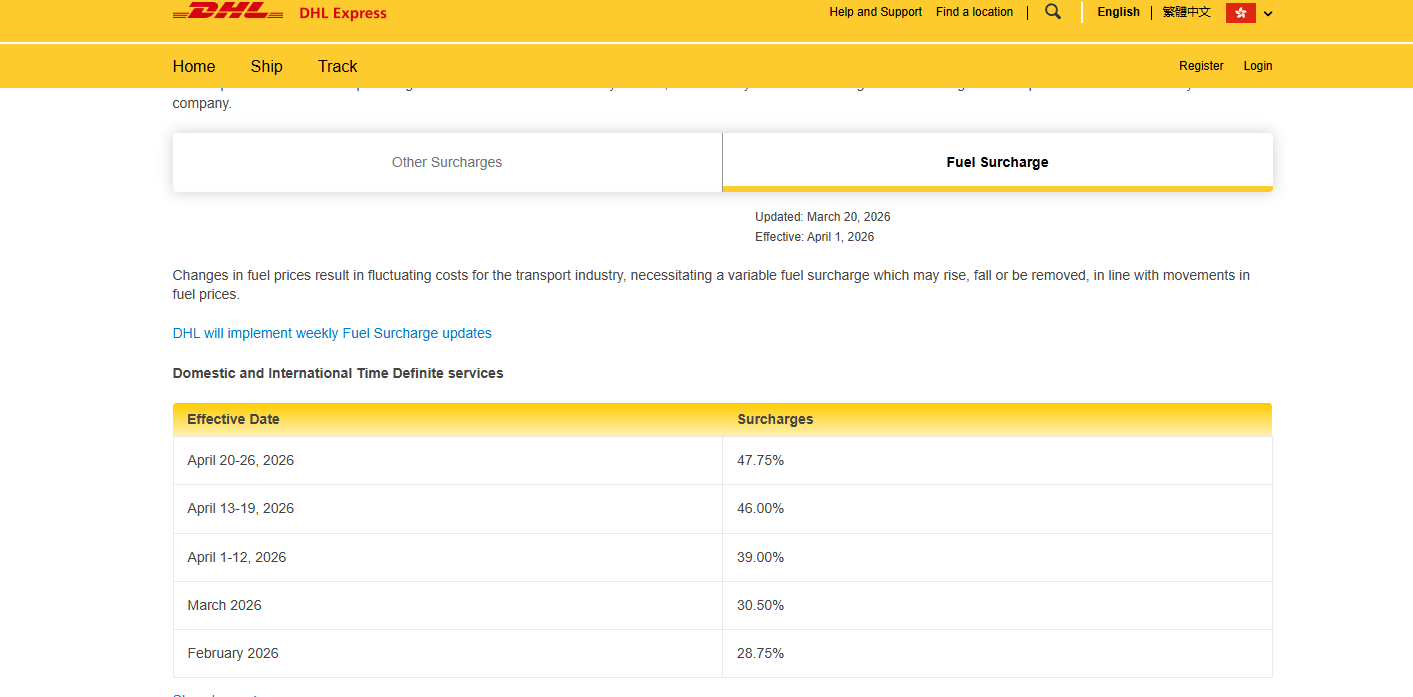
For April 2026, the DHL fuel surcharge is set at 39.0%. The UPS fuel surcharge reached 46.25% at the beginning of the month and climbed to 48.5% by mid-April. These rates apply directly to your base shipping costs.
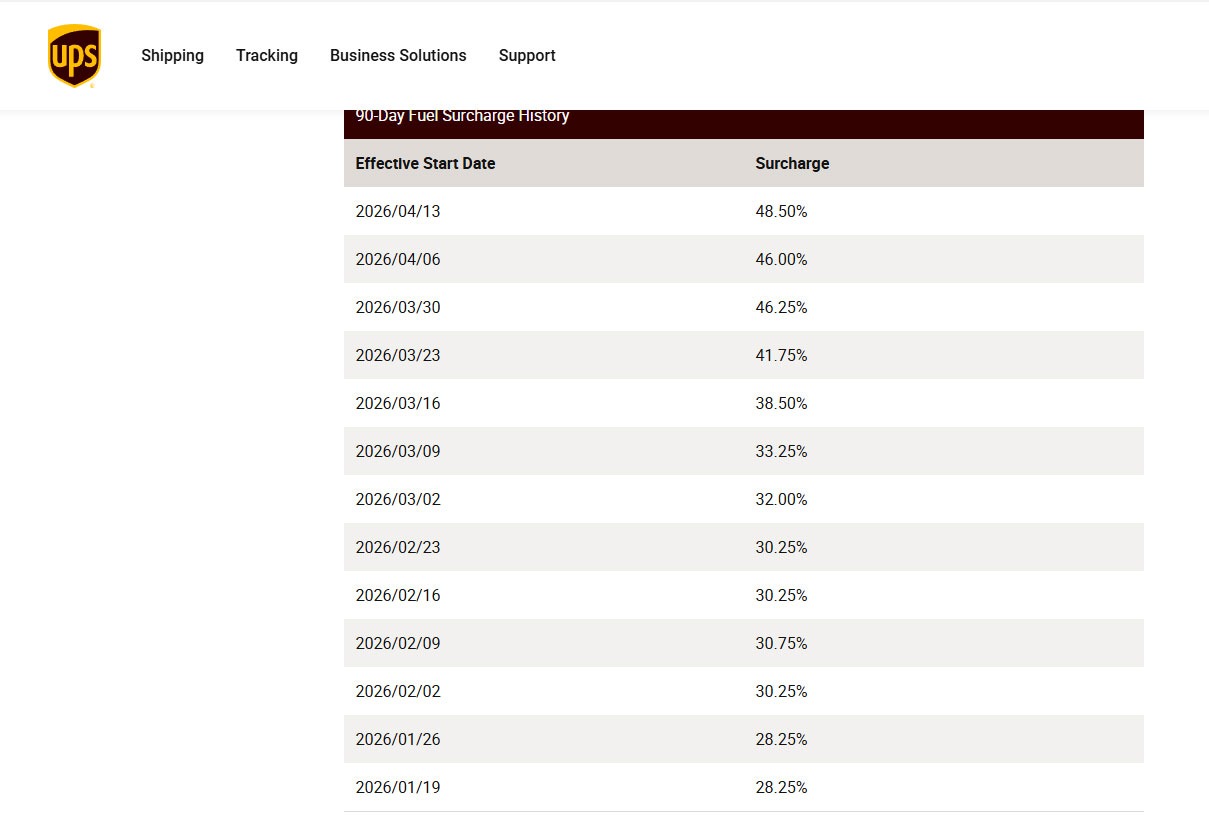
The fuel surcharge is an additional fee applied to international express shipments, calculated as a percentage of the base transportation rate. Because fuel prices are volatile, carriers adjust these percentages frequently—DHL usually updates monthly, while UPS updates weekly. Understanding these exact figures is the first step to accurately forecasting your logistics budget.
Why Are International Express Fuel Surcharges Fluctuating So Much?
The unprecedented fluctuation in April 2026 is entirely driven by the volatility of international oil prices. When crude oil prices spike, the cost of aviation fuel—which powers the massive cargo planes used by DHL, UPS, and FedEx—skyrockets simultaneously. Carriers pass these increased operational costs directly to consumers to maintain their profit margins.
For instance, UPS bases its surcharge on the U.S. Gulf Coast prices for kerosene-type jet fuel, adjusting its rates every single week to match market realities. This means that in April 2026, as global energy markets experienced turbulence, buyers saw surcharges adjusted multiple times within a single month.
How Do DHL and UPS Calculate Their Fuel Surcharges?
The calculation is straightforward: Base Freight Rate × Fuel Surcharge Percentage = Fuel Surcharge Amount.
For example, if your base rate with DHL is $1,000 and the April 2026 surcharge is 39%, you will pay an additional $390 just for fuel. The total shipping cost before other accessorial fees would be $1,390. It is crucial to remember that the surcharge is calculated on the Chargeable Weight (either the actual weight or the volumetric weight, whichever is higher), not just the base rate alone.
DHL vs. UPS vs. FedEx: Which Express Service is Best for Your Cargo?
| Carrier Feature | DHL Express | UPS Express | FedEx Express |
| April 2026 Peak Surcharge | 39.0% to 47.75% | 46.25% to 48.5% | 46.25% |
| Update Frequency | Monthly / Bi-weekly | Weekly | Weekly |
| Best Regional Strength | Europe, Middle East, Africa | North America | North America, Asia |
When comparing carriers, do not just look at the base rate; the final cost depends heavily on the prevailing surcharge. DHL typically offers exceptional speed and reliability for European and Middle Eastern routes. Conversely, UPS and FedEx often dominate the North American market. If you are shipping to an Amazon FBA warehouse in the US, UPS might offer better domestic routing, but you must factor in their higher, weekly-fluctuating fuel surcharges.
The Hidden Trap: How Volumetric Weight Amplifies Fuel Costs
Volumetric Weight (or Dimensional Weight) is the hidden trap that multiplies your fuel surcharge burden. Carriers charge based on the space a package occupies, not just its physical weight.
If you ship a large box of lightweight items, the carrier calculates the Volumetric Weight using a standard formula (typically Length × Width × Height / 5000 in cm). Because the fuel surcharge is applied to the higher Chargeable Weight, inefficient packaging means you are paying a 39% or 46% premium on “empty air”.
Air Freight and Ocean Freight: Smart Alternatives to High Express Costs
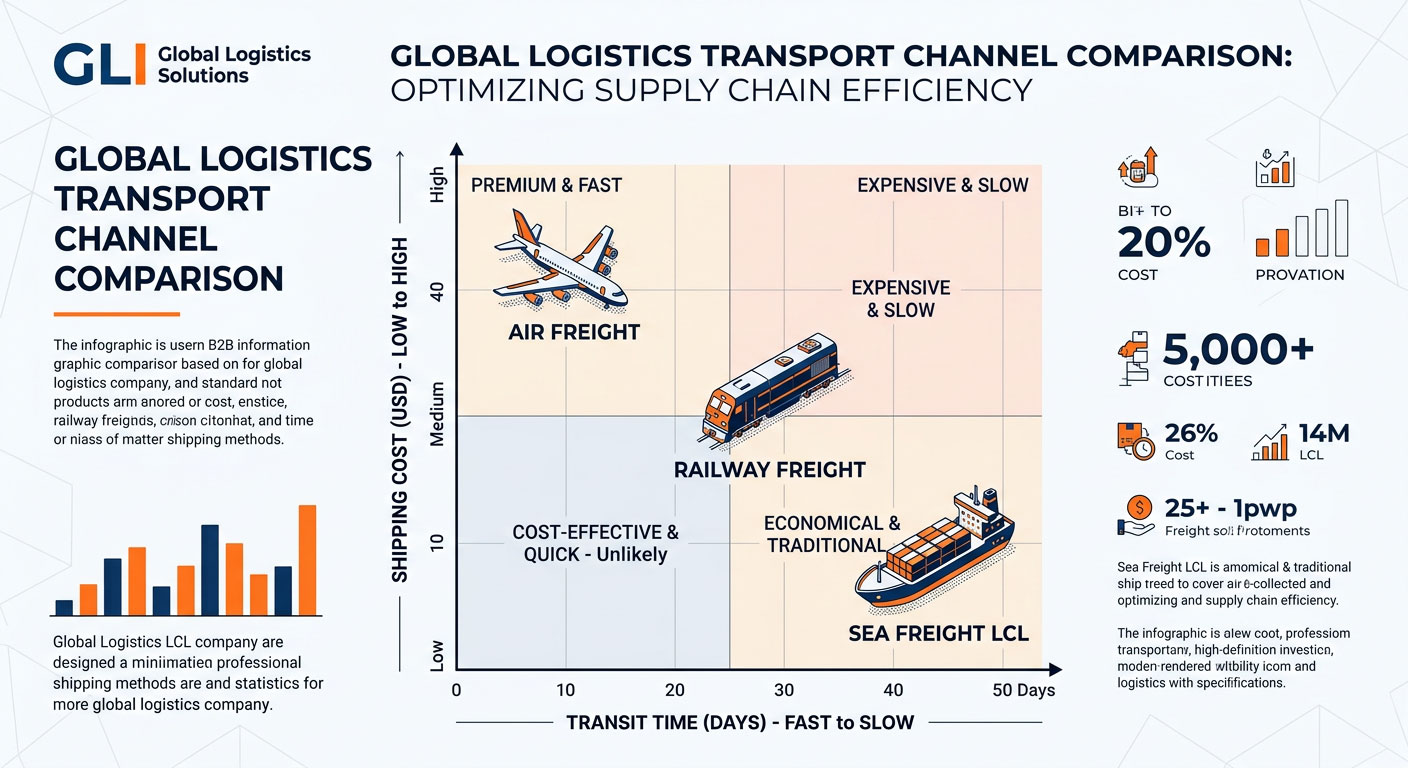
When express fuel surcharges push your costs too high, traditional Air Freight or Ocean Freight (LCL/FCL) become vital alternatives.
Express services offer door-to-door convenience, but Air Freight (airport-to-airport) often features lower base rates and more stable fuel calculations. For non-urgent shipments, Ocean Freight is the ultimate cost-saver. By utilizing our specialized DDP (Delivered Duty Paid) Air or Ocean services, you can lock in an all-inclusive rate upfront, completely bypassing the weekly shocks of express carrier fuel surcharges.
3 Expert Tips to Reduce Shipping Costs from China in 2026
💡 Expert Tip: Master Carton Optimization
Ensure your factory packs goods tightly. Shaving just a few centimeters off your master cartons can drastically reduce your Volumetric Weight, which directly lowers both the base rate and the subsequent fuel surcharge penalty.
💡 Expert Tip: Strategic Timing
Because UPS and FedEx update surcharges weekly, monitor the trends. If you know surcharges are projected to rise next week, push your supplier to hand over the goods to the carrier by Friday to lock in the current, lower rate.
💡 Expert Tip: Switch to All-Inclusive DDP Channels
Instead of using your own DHL/UPS account, utilize a freight forwarder’s dedicated Air or Ocean DDP channels. These channels often quote a flat per-kg rate that absorbs minor fuel fluctuations, providing predictable costs for Amazon FBA sellers.
Common Hidden Fees to Watch Out For Beyond Fuel Surcharges
Fuel is not the only extra cost. Both DHL and UPS impose aggressive accessorial fees that can blindside buyers.
For example, if you ship to a non-central location, you will be hit with a Remote Area Surcharge (around RMB 4.00 per kg). Furthermore, Oversize Package Surcharges and Peak Season Demand Surcharges are frequently applied to large or awkwardly shaped cartons. Always ask your forwarder for an itemized quote to ensure there are no surprises.
Frequently Asked Questions (FAQs) About International Shipping Rates
How often do DHL and UPS update their fuel surcharges?
UPS and FedEx typically update their fuel surcharges every Monday, based on U.S. Gulf Coast jet fuel prices. DHL adjusts its rates on a monthly basis, though extreme market volatility can prompt mid-month changes.
Is the fuel surcharge negotiable?
While large enterprise clients might negotiate base discounts, the fuel surcharge percentage itself is strictly enforced by the carriers and is non-negotiable for individual shipments.
Does the fuel surcharge apply to customs duties?
No, the fuel surcharge only applies to the base freight rate and certain transportation-related accessorial fees. It does not apply to customs duties, taxes, or clearance fees.
Get a Transparent, All-Inclusive Shipping Quote Today
Stop letting unpredictable fuel surcharges eat into your profit margins. Whether you are shipping to an Amazon FBA center in the US or a warehouse in Europe, we provide transparent, competitive rates with no hidden fees. Provide your cargo’s weight, dimensions, and destination today, and let us design a custom, cost-saving logistics plan tailored to your business.