





Top International Shipping Companies: Your 2026 Guide to Importing from China
Importing from China often means facing peak season warehouse delays, Volumetric Weight billing traps, and strict Amazon FBA rejections that destroy your profit margins. You book cargo with massive carriers, only to realize your shipment is stuck at the destination port due to missing customs documents. Worse, you are suddenly hit with hidden destination charges you never agreed to pay, turning your supply chain into a liability rather than a competitive advantage.
Partnering with the right global freight forwarder changes everything. At Shenzhen ZYT Logistics, we bypass the chaos. We provide transparent, end-to-end sea, air, and rail freight solutions designed specifically for B2B buyers and eCommerce sellers. By controlling the process from the factory floor to your final warehouse, we ensure your cargo arrives safely, on budget, and perfectly compliant with local regulations.
What Are International Shipping Companies?
International shipping companies are global organizations that transport commercial cargo across borders using ocean vessels, cargo planes, and freight trains. They manage the physical movement of goods, operating massive fleets to facilitate international trade between global manufacturers and overseas B2B buyers.
While the term is widely used, there is a strict difference between asset-based carriers and service-based logistics providers. Asset-based carriers, such as ocean vessel operators (Maersk, MSC, COSCO) or major airlines, own the physical transport vehicles. They focus on moving standardized containers from Port A to Port B. However, they rarely deal directly with mid-sized B2B buyers or handle the nuanced requirements of door-to-door delivery, export licenses, or local warehousing. This is where specialized logistics providers step in to bridge the gap between factory production and final delivery.
Shipping Companies vs. Freight Forwarders: What You Need
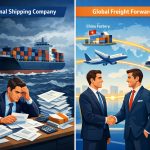
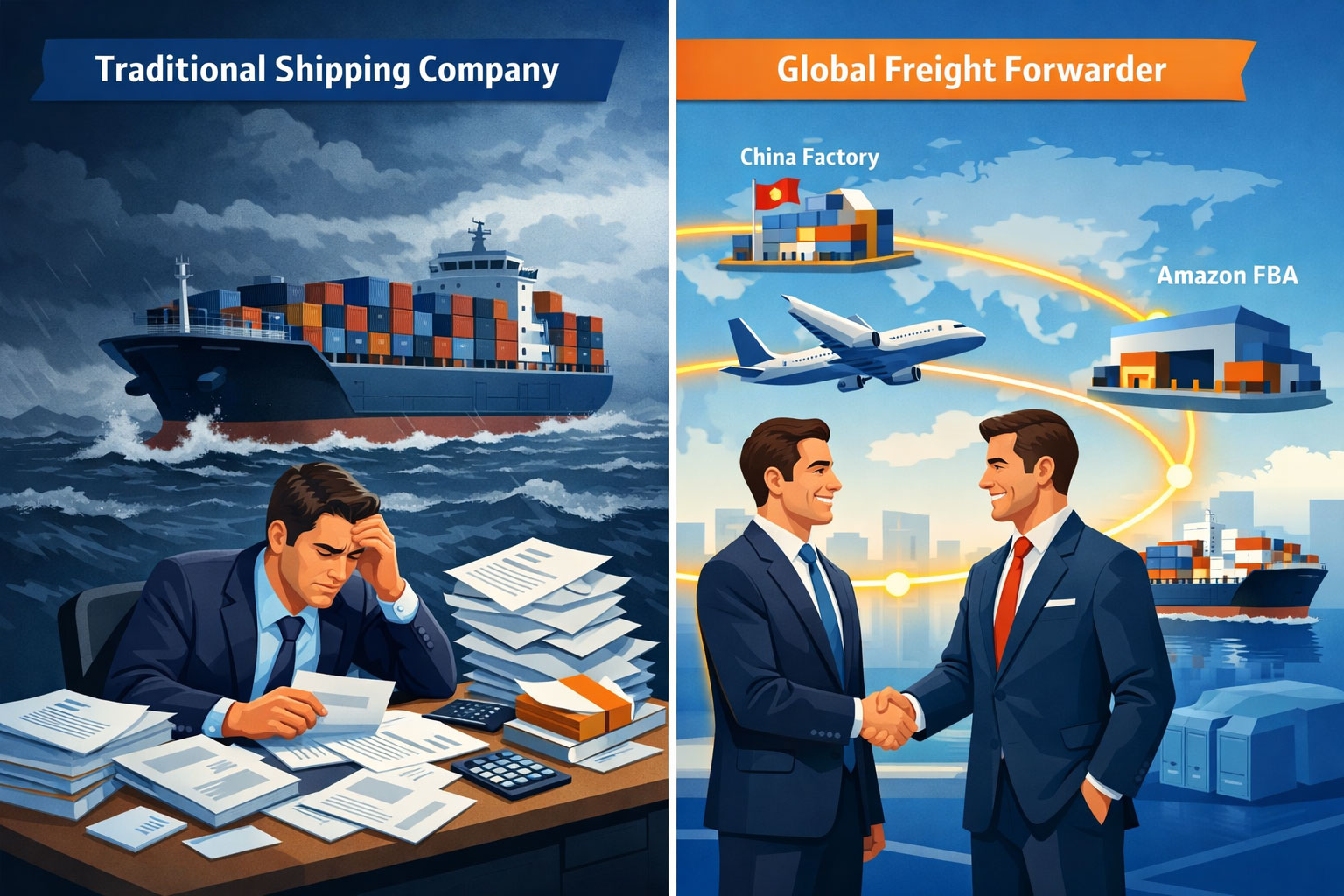
Many overseas buyers assume they should contact international shipping companies directly to secure the lowest rates. In reality, major vessel operators do not offer personalized service for small-to-medium enterprises. They do not handle your factory pickups, nor do they help you consolidate goods from multiple suppliers.
A professional global freight forwarder like Shenzhen ZYT Logistics acts as your outsourced logistics department. We secure wholesale space from major carriers and design custom B2B logistics solutions. Instead of juggling communication with a trucking company, an ocean carrier, a customs broker, and a final-mile delivery service, you deal with one dedicated account manager. We issue the Bill of Lading (B/L), handle the export declarations in China, and ensure the entire process is synchronized. Your supply chain becomes seamless, allowing you to focus on sales and business growth rather than tracking container ships.
Top Challenges When Shipping from China to Global Markets
Sourcing products from China is highly profitable, but the logistics execution presents several distinct hurdles for international buyers:
-
Communication and Time Zone Gaps: Factories operate on Beijing Time. When an urgent loading issue occurs, your local time might be 2:00 AM. Without a local logistics representative in China, minor issues escalate into missed vessel departures.
-
Documentation Errors: Missing a single detail on the Commercial Invoice or Packing List can result in severe customs holds.
-
Hidden Fees: Many buyers receive a seemingly cheap initial freight quote, only to face massive destination terminal handling charges (DTHC), document fees, and port congestion surcharges upon arrival.
-
Capacity Constraints: During peak seasons (like the months preceding Q4 holidays), securing space on direct flights or fast ocean vessels becomes nearly impossible without long-term carrier contracts.
Express, Air, or Ocean Freight: Which Channel Fits Your Business?
Choosing the correct transport mode dictates your cash flow, inventory turnover rate, and overall profit margin. We structure our services into three main tiers based on buyer urgency and budget:
-
International Express (DHL, UPS, FedEx): Best for urgent samples, small parcels, or high-value electronics under 100kg. Transit time is typically 3-5 days globally. It offers door-to-door service with simplified clearance, but at the highest cost per kilogram.
-
Air Freight: The standard for mid-sized urgent shipments (21kg to 1000kg). It requires formal customs clearance at the destination airport. Air freight is highly reliable and takes about 5-8 days for China to US shipping, making it ideal for restocking fast-selling eCommerce inventory.
-
Ocean Freight Services: The backbone of global trade, designed for bulk orders. While transit times range from 15 to 40 days depending on the destination, it reduces transportation costs by up to 80% compared to air freight.
Understanding FCL and LCL in Ocean Freight
When utilizing ocean freight services, buyers must choose between two primary container shipping methods based on their cargo volume.
FCL (Full Container Load) means you rent the entire 20-foot or 40-foot container exclusively for your goods. FCL is highly secure, minimizes the risk of damage since the doors remain sealed from the Chinese factory to your warehouse, and offers a lower cost per unit once your cargo exceeds roughly 15 cubic meters (CBM).
LCL (Less than Container Load) is designed for smaller shipments (typically 1 CBM to 15 CBM). Your cargo shares container space with goods from other importers. While LCL provides flexibility for smaller orders, it requires consolidation at the origin port and deconsolidation at the destination port, which slightly extends transit times and involves specific CFS (Container Freight Station) handling fees.
Why Choose China-Europe Freight Trains for EU Imports?
For European buyers, the China-Europe Railway Express serves as the perfect middle ground between the high cost of air freight and the slow transit of ocean freight.
Operating from major Chinese hubs to destinations in Germany, Poland, and the UK, rail freight cuts transit times to roughly 25-35 days. It is particularly effective for heavy machinery, automotive parts, and mid-tier consumer electronics. Furthermore, rail transport produces a significantly lower carbon footprint than air transport, aligning with the green supply chain mandates of many modern European corporations. Shenzhen ZYT Logistics offers both FCL and LCL rail services, complete with destination customs clearance.
How to Calculate Volumetric Weight for Your Cargo
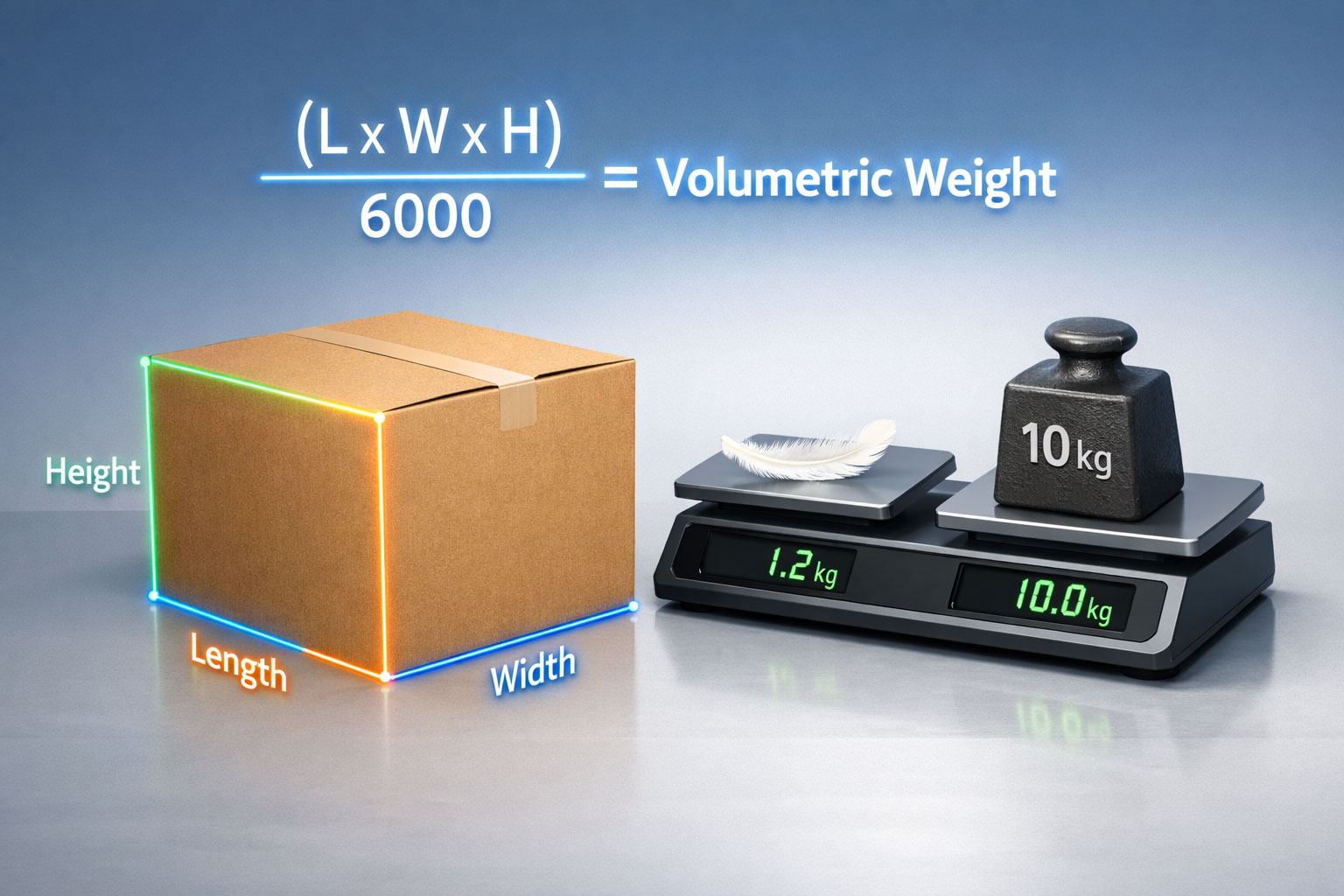
To calculate volumetric weight for standard air freight, multiply the carton’s length, width, and height in centimeters, then divide by 6000. In this industry standard, 1 CBM equals 167kg. Airlines charge based on whichever figure is higher: actual weight or volumetric weight.
Understanding this formula is vital for protecting your margins. For example, if you are importing lightweight plush toys, the physical weight might only be 50kg, but the boxes occupy 1 CBM of space. The airline will bill you for 167kg (the volumetric weight).
💡 Expert Tip: Carton Optimization
Never ship half-empty boxes. Work with your supplier to compress lightweight goods (like apparel or bedding) using vacuum sealing. Alternatively, ask Shenzhen ZYT Logistics to consolidate your lightweight goods with heavy goods (like metal hardware) to balance the density and lower your overall freight bill.
The Critical Role of Customs Brokerage and Incoterms
Customs clearance is the most rigid barrier in international trade. Without proper Customs Brokerage, cargo faces intense scrutiny, penalties, or even destruction. Success depends entirely on accurate paperwork and a clear understanding of Incoterms (International Commercial Terms).
-
EXW (Ex Works): You are responsible for everything the moment the goods leave the factory floor. You must arrange the pickup, export clearance in China, and international transport.
-
FOB (Free on Board): The Chinese supplier covers the cost and responsibility of moving the goods to the origin port and clearing them for export. You take over the ocean freight and destination import process.
-
DDP (Delivered Duty Paid): The ultimate hassle-free solution. The forwarder handles all transport, export customs, import customs, and pays all duties and taxes. You simply receive the goods at your door.
Regardless of the Incoterm, your Commercial Invoice and Packing List must precisely match the physical cargo. HS (Harmonized System) codes must be classified correctly to ensure you pay the legal, accurate tariff rate.
How to Avoid Hidden Fees in Global Logistics
Unscrupulous forwarders often bait B2B buyers with incredibly low origin freight rates, only to hold the Bill of Lading (B/L) hostage until exorbitant destination charges are paid. To protect your business:
-
Request All-In Quotes: Demand a breakdown of origin charges, ocean/air freight, destination terminal fees, and customs processing fees.
-
Clarify Duties and Taxes: Ensure you know whether the quote includes import tariffs. For Amazon FBA sellers, utilizing a DDP service eliminates surprise tax bills.
-
Anticipate Storage Costs: Have a clear plan for unloading. If you fail to pick up an FCL container from the port within the allotted free days, you will be hit with severe Demurrage and Detention charges daily.
Shenzhen ZYT Logistics strictly adheres to a transparent pricing model. The quote we provide is the price you pay, ensuring your landed cost calculations remain perfectly accurate.
📊 Case Study: Seamless Amazon FBA Shipping from China
The Challenge: A mid-sized US Amazon seller was importing patio furniture from Guangzhou. Their previous forwarder failed to inspect the cargo before export. Upon arrival in California, Amazon FBA rejected the entire delivery because the cargo was stacked on untreated wooden pallets, violating international ISPM 15 regulations. The seller incurred thousands of dollars in repalletizing fees and missed the crucial spring sales window.
The ZYT Solution: When the seller switched to Shenzhen ZYT Logistics, we implemented a strict Standard Operating Procedure. We received the goods at our Shenzhen warehouse, verified the carton dimensions against Amazon’s FBA requirements, and transferred the goods onto compliant, fumigated plastic pallets. We routed the cargo via expedited ocean freight services and utilized our dedicated trucking network to deliver directly to the FBA fulfillment center.
The Result: Zero rejections, zero hidden repacking fees, and a 15% reduction in overall transit time, allowing the seller to maintain a 100% in-stock rate during peak season.
Frequently Asked Questions (FAQ) About International Shipping
1. How long does customs clearance take when importing from China?
If your documentation (Commercial Invoice, Packing List, and B/L) is perfectly accurate, standard customs clearance typically takes 24 to 48 hours. However, if customs flags your cargo for a random physical exam (like an X-ray or intensive exam), it can delay the shipment by 3 to 14 days.
2. Can you ship products with batteries via air freight?
Yes, but lithium batteries are classified as Dangerous Goods (DG). Your supplier must provide a valid MSDS (Material Safety Data Sheet) and an UN38.3 test report. We have specialized air freight channels specifically certified to handle internal and standalone battery shipments legally and safely.
3. What is the difference between an NVOCC and a Freight Forwarder?
An NVOCC (Non-Vessel Operating Common Carrier) legally acts as a carrier and can issue its own House Bill of Lading. A Freight Forwarder acts as an agent arranging the transport. In practice, many top logistics providers, including ZYT, operate as both to provide maximum flexibility and legal protection for your cargo.
Get a Fast, Transparent Shipping Quote from ZYT Logistics Today
Stop losing money to hidden fees, poor communication, and mismanaged supply chains. You need a partner who treats your cargo with the same urgency as you do. Whether you need heavy-duty ocean freight services for factory machinery, rapid air freight for eCommerce inventory, or a completely hands-off DDP solution for Amazon FBA, Shenzhen ZYT Logistics has the infrastructure to deliver.
Take control of your logistics today. Contact us with your cargo’s total weight, dimensions, origin city in China, and destination address. Our expert team will provide a transparent, competitively priced logistics solution within 2 hours. Let us handle the complexities of global shipping so you can focus on scaling your business.